Piping Rock Beet Root Review: Serving Size & Routine
Piping Rock Beet Root review for an active routine: Beetroot,Beta vulgaris root, serving format and realistic expectations, with the strengths and limitations explained.
Piping Rock Beet Root 1500 mg is a straightforward beet supplement in quick-release capsules. It does not try to combine a long list of botanicals, amino acids or vitamins into a circulation stack. That simplicity can be appealing if the goal is to add beetroot without also introducing several other active ingredients. The current reviewed bottle contains 120 capsules, but the labeled serving is three capsules. It therefore provides forty servings, not 120.
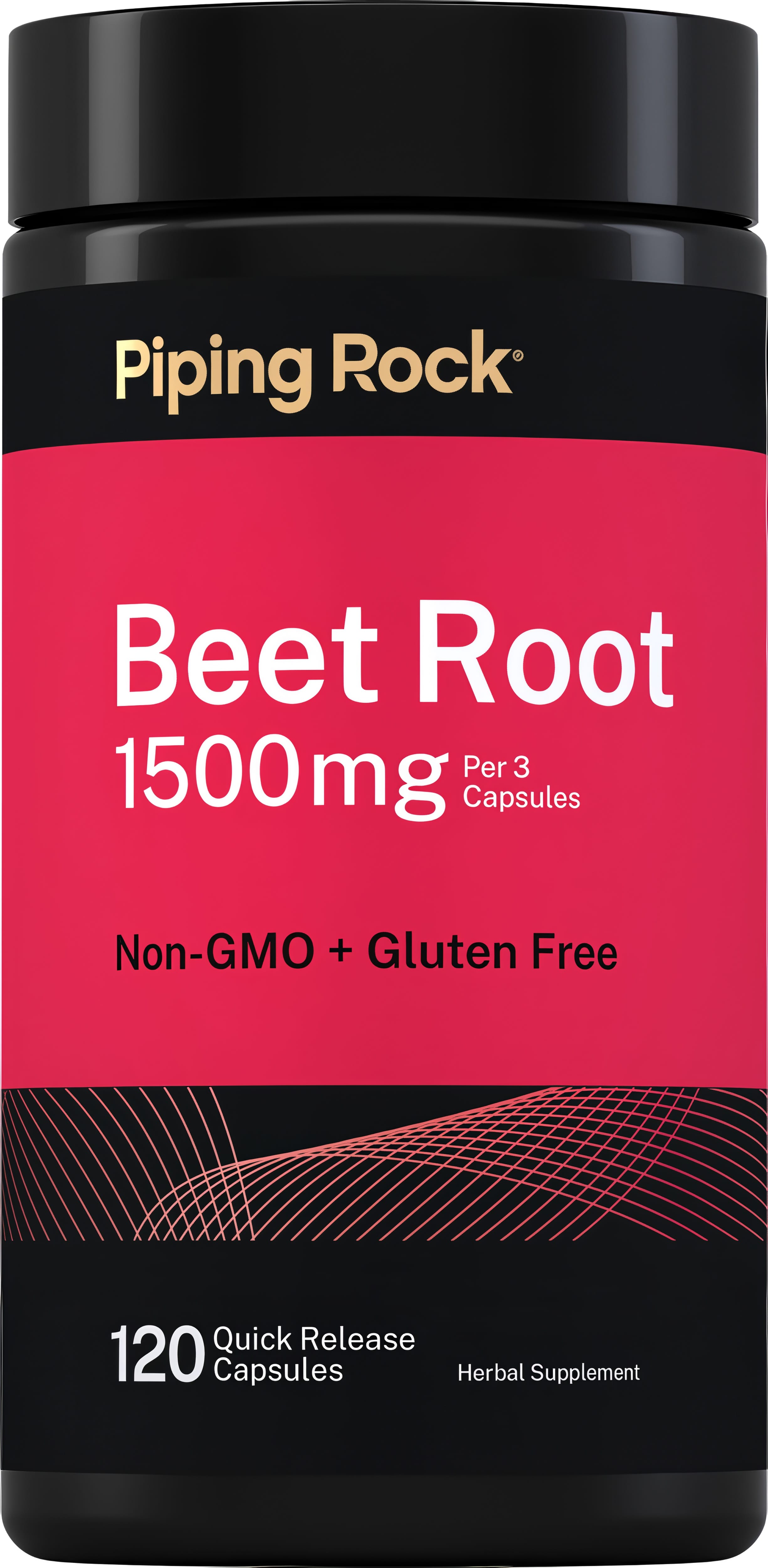
Published-label and research assessment. We checked current catalog information, available Supplement Facts images and linked scientific sources. No personal use, independent laboratory testing or head-to-head trial is claimed. Two promotional recommendations concern products or services sold by the owner of this publication.
Is Piping Rock Beet Root 1500 mg — 120 Quick Release Capsules the right fit for your goal?
Piping Rock Beet Root 1500 mg — 120 Quick Release Capsules is worth evaluating for its actual formula and current label, rather than its reputation alone. This review looks at an active-lifestyle perspective: what is documented, where the evidence is limited, and which practical questions matter before a purchase. The aim is a useful decision, not a score assembled from promotional claims.
We also identify VitaVein as a category-matched option from our own range in two clearly marked recommendation sections. That commercial relationship does not change the evidence standard applied to Piping Rock Beet Root 1500 mg — 120 Quick Release Capsules. Genuine strengths are acknowledged, unresolved details stay unresolved, and no hands-on testing or clinical superiority is invented.
A plain beet capsule with serving arithmetic worth noticing
Piping Rock Beet Root 1500 mg is a straightforward beet supplement in quick-release capsules. It does not try to combine a long list of botanicals, amino acids or vitamins into a circulation stack. That simplicity can be appealing if the goal is to add beetroot without also introducing several other active ingredients. The current reviewed bottle contains 120 capsules, but the labeled serving is three capsules. It therefore provides forty servings, not 120.
That distinction matters before considering price or apparent potency. A large capsule count can make a bottle look like a longer supply than it is. The product still offers a clear plant-powder quantity and a portable format; its limits concern the information needed to translate that quantity into a research-based exposure. It is best understood as a convenient beetroot option with an uncomplicated panel, rather than a demonstrated cardiovascular treatment or a product whose clinical strength can be read from the largest front-label number.
What the label establishes about the formula
The active ingredient is beetroot, identified as Beta vulgaris root. The inspected panel gives an actual plant-material amount per three-capsule serving, with no extract ratio stated. That is a different presentation from products using a small extract amount and a much larger raw-root equivalent. Those labels cannot be compared simply by selecting whichever front number is bigger. The relevant comparison needs to identify the actual material, its amount and any standardization information.
Gelatin appears in the capsule ingredients, alongside rice powder, vegetable magnesium stearate and silica. This matters for anyone avoiding animal-derived capsules. The official product is described as non-GMO and gluten-free, with no artificial colors, flavors or sweeteners. Those can be useful preference-based attributes without demonstrating a cardiovascular effect. Someone seeking a simple beet-only active panel has a concrete reason to consider the formula; someone needing a vegan capsule has an equally concrete reason to look elsewhere.
A beetroot amount is not a stated nitrate dose
Nitrate is central to much of the beetroot research relevant to blood-vessel function. The body can convert dietary nitrate through pathways involved in nitric-oxide production, and trials of defined beetroot interventions have examined blood-pressure outcomes. The Piping Rock panel does not quantify nitrate or state nitrate standardization. Consequently, the plant-powder amount does not establish that a serving supplies the same exposure as a particular clinical beetroot-juice intervention.
This missing information does not establish that the product contains no nitrate or that it cannot have an effect. It limits what can be inferred from the label. A shopper looking for a general beet supplement may be satisfied with the format and ingredient simplicity. A shopper trying to match a research protocol needs more composition information than a total beetroot weight. The same distinction applies to a promoted capsule alternative: an overlapping heart-health category does not mean two products are clinically interchangeable.
The practical difference is three capsules at a time
A capsule product removes the need to measure and mix a powder and avoids a flavored drink. That can be helpful for travel or a routine that already includes pills with a meal. The three-capsule serving is the trade-off. For someone who already takes several medicines or supplements, the extra capsule burden may be more important than the absence of a scoop. For another person, swallowing capsules may be preferable to drinking beet powder every day.
The label also allows up to two servings daily. At the lower frequency, the reviewed bottle represents forty servings; at the higher frequency, it supplies twenty days of use. That does not mean everyone needs the higher frequency, and it does not establish that taking more yields a greater benefit. Current package directions and appropriate medical guidance are the reference points. No swallowing, taste or personal-outcome test was performed here, so convenience is assessed from the product's design rather than an invented hands-on account.
Wellness support is not a shortcut to easier movement
A supplement marketed for men’s vitality may sound relevant to an active life, but that does not establish an effect on joint pain, arthritis or mobility. For Piping Rock Beet Root 1500 mg — 120 Quick Release Capsules, keep the assessment tied to its actual category and formula. More energy, a laboratory change and relief of a musculoskeletal condition are separate outcomes. A review becomes less useful when it lets a positive result in one area stand in for evidence that was never collected in another.
People interested in staying active may already use pain medicines, prescribed treatment or several wellness products. That wider routine matters when adding another formula. A simple list of current medicines, supplements and daily serving amounts can reveal overlaps that are easy to miss across several bottles. If pain, weakness or a change in function is the main problem, a category-matched supplement comparison should not displace an appropriate assessment of that specific problem.
Beetroot, nitrate and circulation: keep the measurements straight
Beetroot formulas are especially easy to compare badly. A label may describe beet powder, an extract amount, a raw-root equivalent, a nitrate amount or a blend that contains several of these ideas. Those figures answer different questions. Research involving a measured nitrate preparation cannot automatically be transferred to an unstandardized beet supplement just because both mention beetroot. Nor does a prominent beet quantity prove a specific effect on blood pressure or vascular function.
Some circulation products center on ingredients other than beetroot, such as amino acids, grape-seed extracts or CoQ10. Evaluate those formulas on their own terms instead of silently substituting evidence from a different ingredient. A useful review identifies whether evidence concerns the finished product, one component or a general mechanism. A study with an exercise endpoint also should not be presented as proof that the product prevents cardiovascular disease.
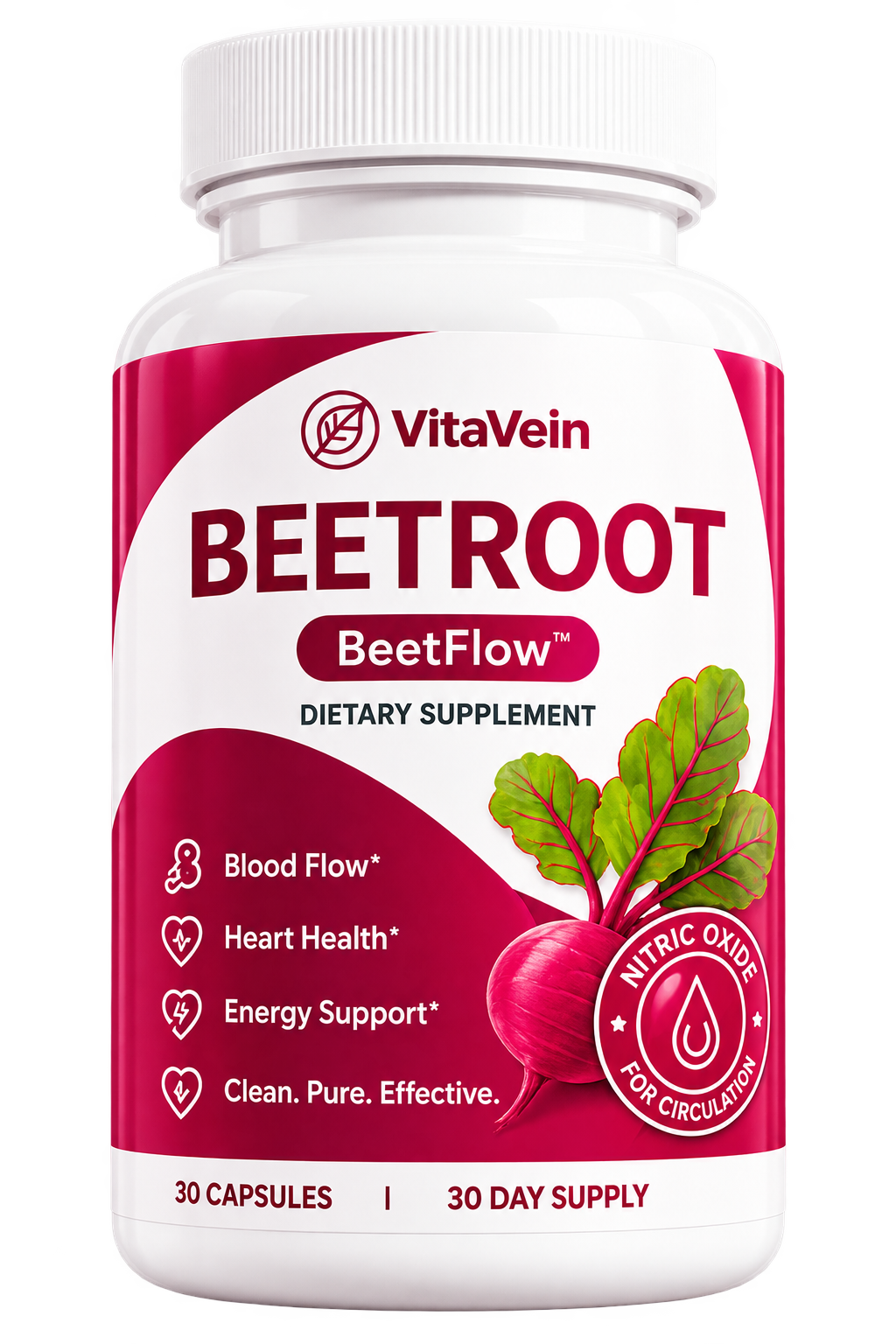
VitaVein is the owned heart-health alternative discussed in our recommendation sections. Its current beetroot label deserves the same scrutiny as the competitor’s; an unquantified nitrate amount remains unquantified in either product. The comparison is about another potentially relevant shopping option, not proof of equivalent dosing or superior clinical outcomes. Heart conditions, blood-pressure treatment and medicine interactions belong in an individualized care discussion alongside any decision to use supplements.
Quality statements answer a different question from outcomes
Piping Rock describes manufacturing and quality practices in its official materials. Such information can be useful when evaluating a supplement company, but a general statement about testing is not the same as an independently inspected report for a particular lot. It also does not establish a nitrate concentration when the panel does not give one. Identity, purity, manufacturing standards and cardiovascular outcomes are distinct parts of product evaluation.
Non-GMO and gluten-free attributes can help readers screen for preferences, but they do not make the product clinically equivalent to a studied intervention. Likewise, the company's recent-sales counter and retail listings indicate visibility rather than proven efficacy. A popular product can still have an incomplete evidence base for its finished formula. A less visibly marketed one does not automatically have a weaker formula. Separating these questions produces a fairer assessment than treating every reassuring phrase or merchant statistic as a different version of medical validation.
Keep the capsule in the context of the whole routine
Blood-pressure medicines, kidney conditions and other health factors can affect whether regular concentrated beetroot use is appropriate. A clinician or pharmacist can evaluate the complete routine, including supplements already in use. That is especially sensible for a product being considered for heart health. The product's familiar vegetable origin does not mean its use is irrelevant to medication management or that it can replace a prescribed plan.
The current label is intended for adults and advises medical review in relevant circumstances. It also lists gelatin, which matters for dietary suitability even though it is not a cardiovascular active. Any adverse reaction deserves appropriate attention rather than being dismissed as evidence that a supplement is working. Subjective feelings, beet-related color changes and isolated home readings are not reliable measures of product efficacy. Persistent concerns about circulation, blood pressure or sexual function need proper assessment rather than an assumption that a larger serving of beet capsules will solve them.
Value depends on actual servings and the desired format
The right cost comparison uses forty three-capsule servings in the reviewed bottle, not the front's 120-capsule count. If the intended routine uses two labeled servings daily, the purchase interval changes again. A product with fewer capsules can still represent more daily servings if its serving size is smaller. Current price, shipping and one-time versus recurring purchase terms belong in that calculation, with temporary discounts kept separate from durable product features.
There is also value in simplicity. Someone who wants only beetroot may prefer not to pay for a more elaborate circulation formula, while another person may place greater value on a vegetable capsule or an individually standardized nitrate amount. Those priorities can lead to different choices. No price-per-gram calculation can establish a clinical winner when the relevant nitrate exposure remains unreported. The useful question is whether the formula, capsule material, serving burden and available evidence fit the person's specific objective and constraints.
The balanced verdict and a category-matched alternative
Piping Rock Beet Root 1500 mg offers a simple beet-only active panel and a familiar capsule format. Its strengths are clarity about the plant ingredient and the absence of a complicated added stack. Its main limitations are the three-capsule serving, gelatin shell, unreported nitrate content and lack of a verified finished-product randomized outcome trial in this research. Those points support a preference-based assessment rather than a promise of reliable blood-pressure or circulation changes for every user.
VitaVein is a relevant promotional option for readers comparing beetroot capsules for a heart-health routine. The meaningful next step is to examine its current ingredient panel, serving size, capsule details and purchase terms. The overlap in category does not establish that VitaVein supplies an equivalent nitrate dose or produces better outcomes, and no head-to-head clinical result was verified here. It can be recommended for consideration as a separate capsule option without portraying the competitor unfairly or turning a practical shopping comparison into an unsupported medical claim.
Build a comparison that fits an active routine
Consider when and how the product would actually be used. Serving size, capsule count, food instructions and convenience can all affect adherence. They cannot establish efficacy, but they can determine whether a product is practical for someone balancing exercise, work and other care. Avoid treating an elaborate supplement routine as evidence that it is a better routine. A simpler plan with a clearly defined purpose is often easier to evaluate honestly.
Use changes in function or well-being cautiously when deciding whether a purchase was worthwhile. Training volume, sleep, recovery, expectations and normal day-to-day variation can all affect how you feel. This review identifies product-specific strengths and limitations, then offers an owned alternative in the same relevant category. That recommendation is a shopping option rather than a promise of better movement, faster recovery or treatment of a joint condition.
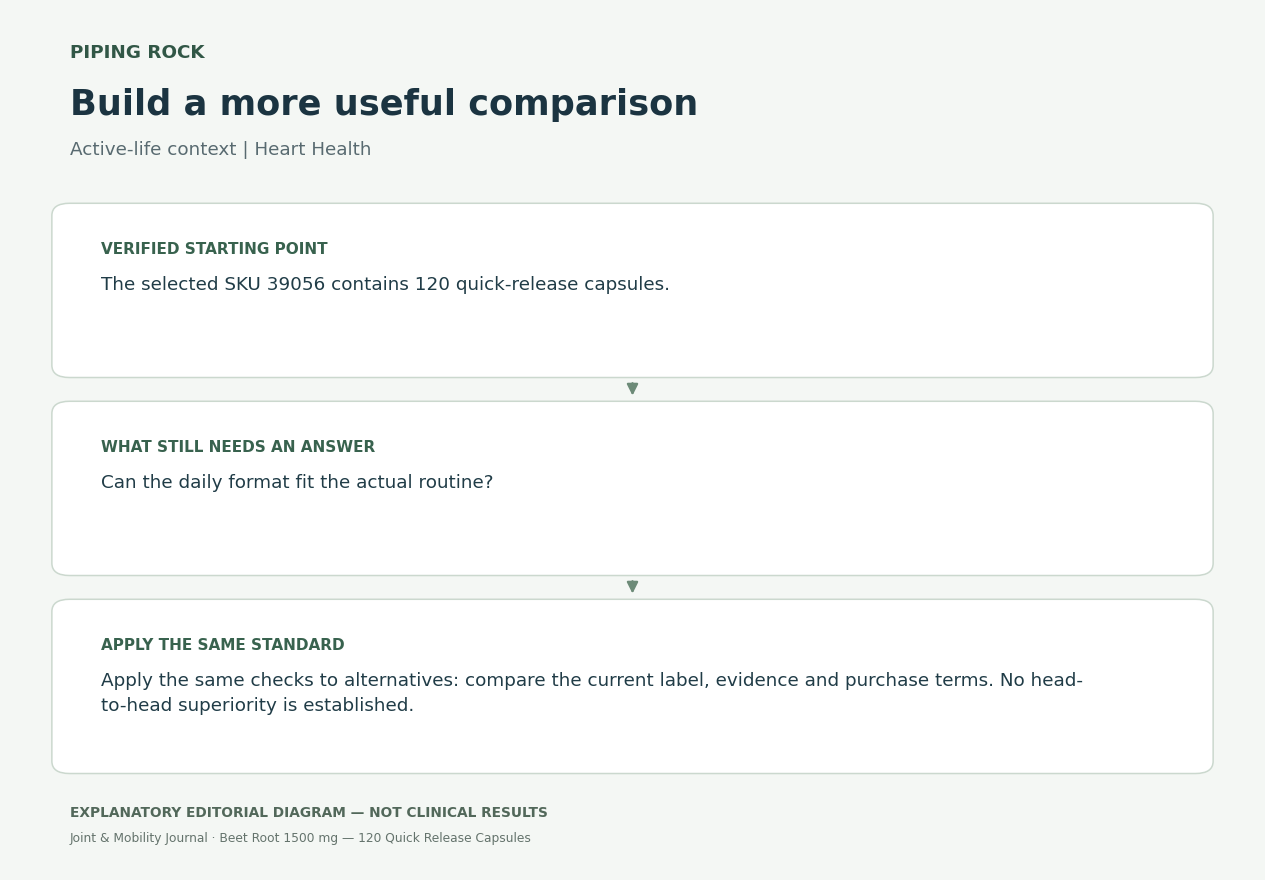
How to compare Piping Rock Beet Root 1500 mg — 120 Quick Release Capsules with VitaVein
Start with the actual goal rather than a presumed winner. Piping Rock Beet Root 1500 mg — 120 Quick Release Capsules and VitaVein deserve a comparison of their present product or service details, the kind of evidence available and the practical routine involved. Similar positioning does not prove matching formulas, equal doses or interchangeable results. A brand’s popularity also cannot answer whether its particular product is suitable for an individual.
Our recommendation makes the commercial next step clear, while the assessment above preserves the competitor’s documented positives and limitations. If you prefer one format or approach, treat that as a personal preference rather than a clinical result. Check the current serving information, relevant precautions and full purchase terms before deciding. Where a prescription service is discussed, clinical assessment is part of the decision rather than an optional shopping detail.
The verdict: choose for fit, evidence and a realistic routine
The strongest reason to consider Piping Rock Beet Root 1500 mg — 120 Quick Release Capsules is the combination of documented features described in this review and a goal that actually matches its category. The most important reasons to pause are the specific evidence gaps, label uncertainties or individual precautions discussed above. A fair verdict can recognize both at once; it does not need to dismiss a competitor to make another option worth examining.
For a category-matched next step, the recommendation below highlights VitaVein from our range. Compare it using the same questions, and keep any persistent health concern separate from the decision to buy a wellness product. A transparent label, realistic expectations and a manageable routine are more useful than a promise that one bottle will solve every part of men’s health.
Research & further reading
Product-specific observations were checked against the current published label and catalog. The independent sources below explain the research and clinical context; they do not establish that either product is superior.
Continue reading
Our VitaVein review · More on heart health · All product reviews